Pentacon Auto 50mm f/1.8: Unearthing a Vintage Bubble Bokeh Treasure
The Pentacon Auto 50mm f/1.8 is one of those vintage lenses that kept popping up in photography groups and sample posts until I eventually gave in.
At first, I was not really looking for one. There are already so many 50mm vintage lenses out there, and after a while they can all start to blur together a bit. But the Pentacon kept catching my eye because of one thing: the bokeh.
Not smooth modern bokeh. Not clinical, perfectly corrected, “everything is very sensible here” bokeh.
Bubble bokeh.
The kind where highlights in the background turn into little glowing circles and the whole image starts looking slightly more magical than it probably has any right to. So naturally, because I have very little self-control when it comes to old lenses, I had to try one.
This is my hands-on review of the Pentacon Auto 50mm f/1.8, covering the build quality, close focusing, bubble bokeh, full-frame vs crop sensor results, and whether I think it is still worth buying.
Quick Verdict
The Pentacon Auto 50mm f/1.8 is a character lens through and through. It is not the cleanest vintage 50mm lens. It is not the most modern-looking lens. It is definitely not something I would recommend if you want perfect sharpness, perfect contrast, and perfectly behaved backgrounds.
But that is also the point. This lens has strong bubble bokeh, surprisingly useful close-focusing ability, solid all-metal build quality, and a very distinct look when you give it the right background.
My copy does have one big problem: the focusing ring is extremely stiff. That makes it more frustrating to use than it should be, especially on an M42 adapter. But optically, the lens has a lot going for it.
If you find a clean copy with smooth focus, the Pentacon Auto 50mm f/1.8 is a very fun vintage lens, especially if you enjoy close-ups, portraits, flowers, details, and busy backgrounds full of highlights.
What Is the Pentacon Auto 50mm f/1.8?
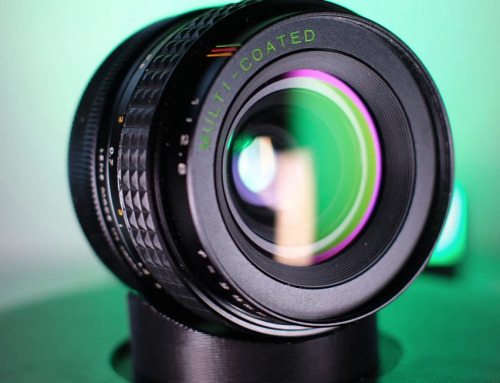
The Pentacon Auto 50mm f/1.8 is a vintage manual-focus lens, commonly found in M42 mount. Like many lenses from this era, it is compact, metal, simple, and built with a kind of seriousness that makes a lot of modern plastic lenses feel a bit nervous.
It is a 50mm lens with a bright f/1.8 aperture, which makes it useful for portraits, general photography, and close-up detail shots.
But the real reason people still talk about this lens is not just because it is a vintage 50mm.
It is because of the way it renders out-of-focus highlights.
With the right background, especially if you have small points of light, leaves, water reflections, or sunlight coming through trees, the Pentacon can produce very strong bubble bokeh. It is not always subtle, and sometimes it can completely take over the image, but when it works, it really works.
Why I Wanted to Try This Lens
I first became interested in the Pentacon Auto 50mm f/1.8 after seeing sample images from other photographers.
That is usually how these things start.
You are minding your own business, then someone posts a photo with ridiculous bokeh, and suddenly you are on Marketplace or eBay trying to justify why you need yet another 50mm lens.
The images I kept seeing from the Pentacon had this bubbly, dreamy background rendering that looked different from many of the other vintage 50mm lenses I had looked at. It had character, but not in a subtle way. It looked like a lens that wanted to make itself known.
That intrigued me.
I was not expecting a perfect lens. With vintage glass, I usually do not want perfect. I want something with a bit of personality. Something that gives me a reason to use it instead of a modern lens.
The Pentacon definitely has personality.
Possibly too much personality, depending on the background.
Build Quality and Handling
The Pentacon Auto 50mm f/1.8 feels like a proper vintage lens.
It has an all-metal body, a compact shape, and a solid feel in the hand. My copy appears to be one of the later versions, with two silver rings at the front, although one of them is missing on mine.
That is part of the charm and danger of vintage lenses. You are not always buying a perfect museum piece. Sometimes you are buying a lens that has clearly lived a life.
The aperture ring on my copy feels good enough, and the overall construction feels solid. This is not a lens that feels fragile or cheap. It has that old-school “I was built when people expected things to last” feeling.
The focusing ring, however, is another story.
My Copy Has a Very Stiff Focus Ring
The biggest issue with my Pentacon 50mm f/1.8 is that the focusing ring is extremely stiff.
This is not necessarily a problem with every copy of the lens, but it is something worth watching out for if you are buying one. Vintage lenses often have old grease in the focusing helicoid, and after decades, that grease can become dry, sticky, or just unpleasant.
On my copy, focusing feels much harder than it should. It still works, but it takes effort, and that makes precise focusing more difficult.
This is especially noticeable on a mirrorless or DSLR setup with an adapter, because you are already dealing with manual focus. Add a stiff focusing ring to that, and suddenly the lens becomes a bit of a workout.
If the focusing was smooth, I think I would enjoy using this lens much more.
So if you are looking for one, do not only ask about the glass. Ask about the focus. A clean-looking lens with horrible focusing can still be annoying to use.
Close Focusing
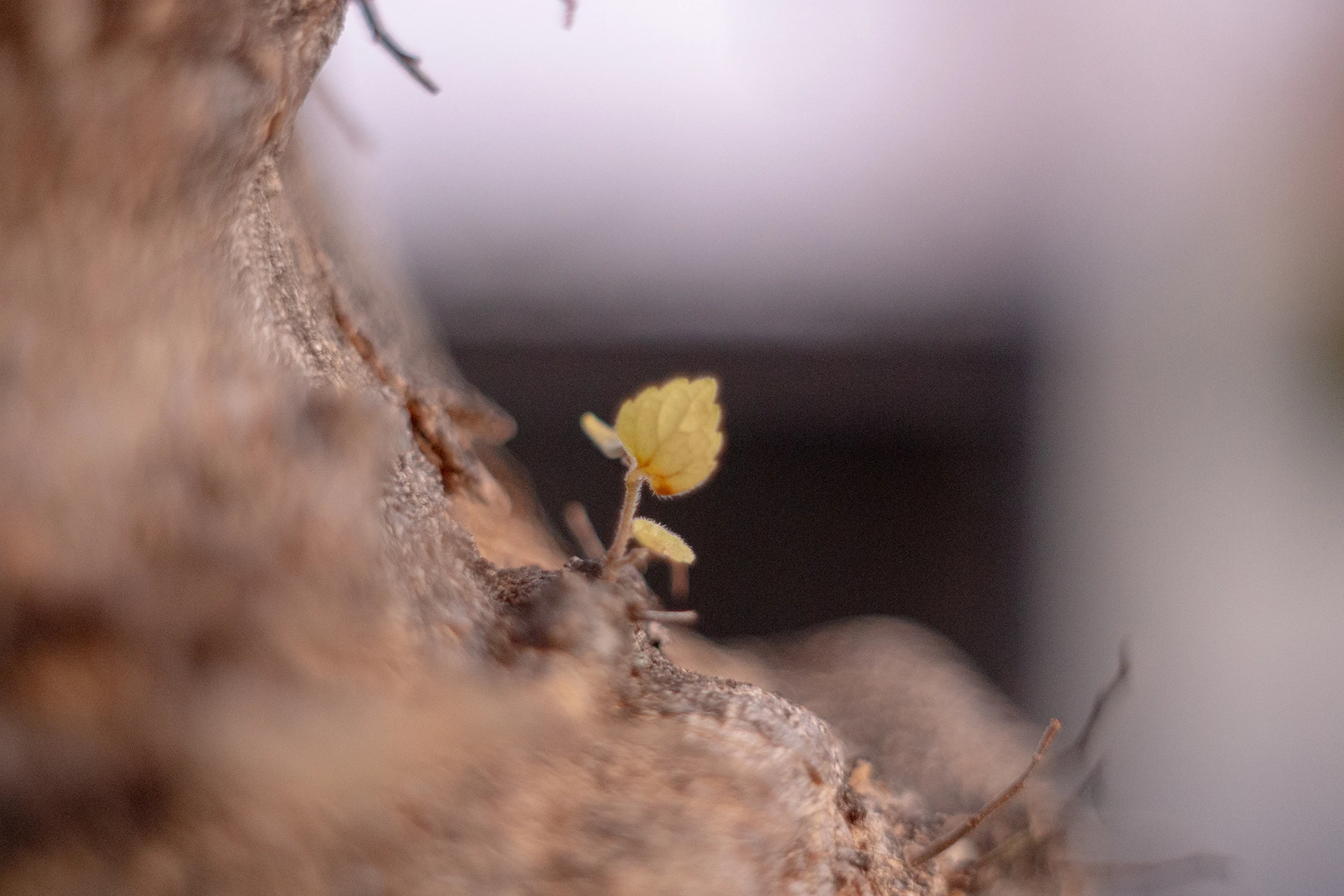
One of the best things about the Pentacon Auto 50mm f/1.8 is the close focusing.
This lens can focus surprisingly close, which makes it much more useful than just being another standard 50mm lens. It works really nicely for flowers, small objects, details, textures, and those “I found something interesting in the garden” type photos.
The close focusing also helps bring out the bokeh.
When you get close to your subject and place some distance between the subject and the background, the lens can produce very strong separation and those bubble-like highlights it is known for.
This is where the Pentacon becomes fun. You do not need an exotic location or a complicated setup. A few leaves in the background, some sunlight, and a close subject can already give you a very interesting look.
With extension tubes or a macro adapter, you can push it even further, but even without that, the close-focus ability is one of the main reasons I like this lens.
Bubble Bokeh
This is the main event.
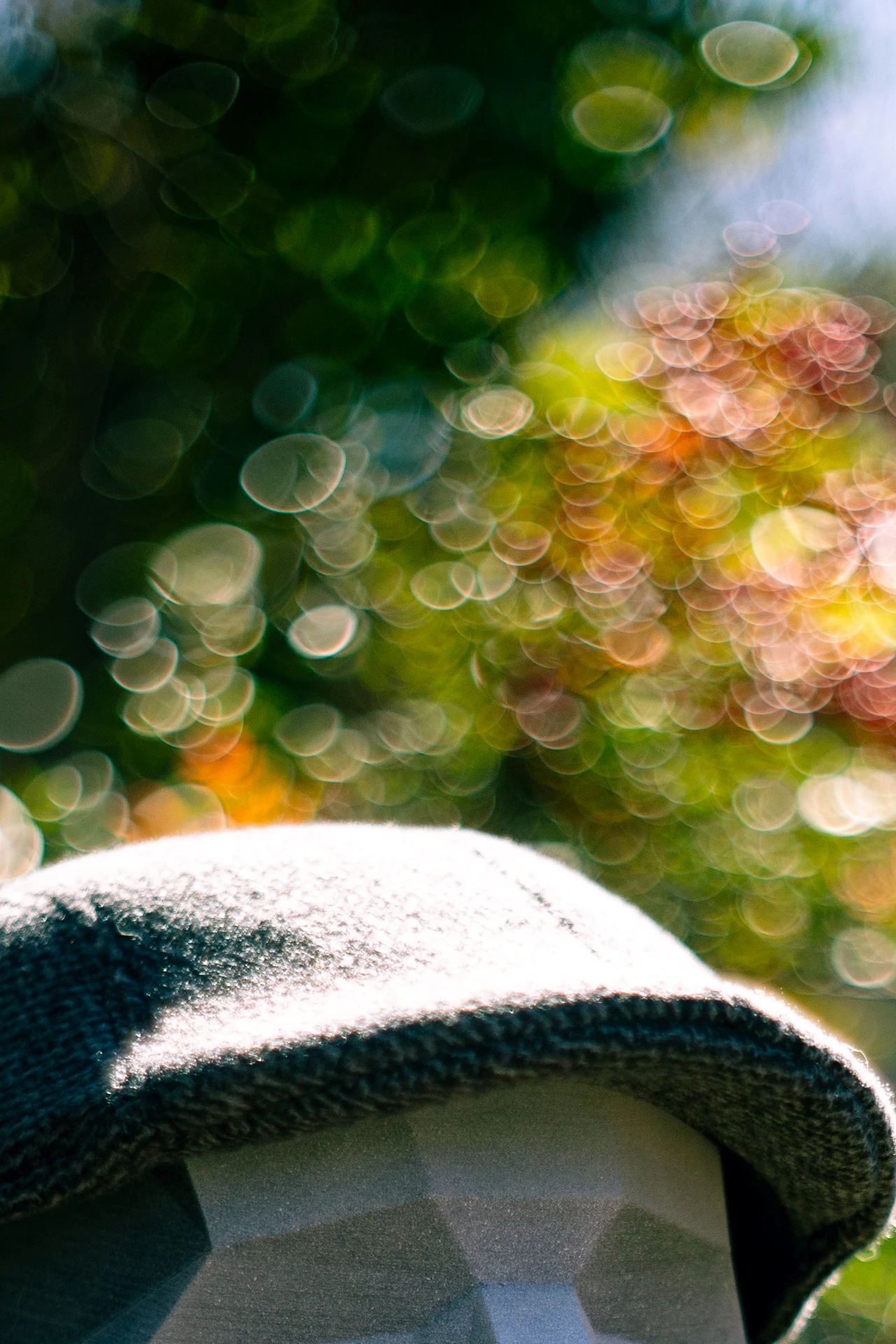
The Pentacon Auto 50mm f/1.8 can produce very strong bubble bokeh when the conditions are right.
The bokeh is not always smooth and polite. It is not trying to disappear into the background. If there are small highlights behind your subject, this lens wants to turn them into little glowing circles.
Sometimes that looks fantastic.
Sometimes it gets completely out of hand.
That is the nature of a lens like this. It is not a neutral tool. It has an opinion.
If you use it with a busy background full of small highlights, you can get that classic soap-bubble effect. The background becomes part of the image, not just something that melts away. This can be great for flowers, portraits, still life, and creative detail shots.
But it also means you need to pay attention to your background. If the scene is already messy, the bokeh can make it even busier. This is not always a bad thing, but it is something to keep in mind.
The Pentacon is at its best when you deliberately use the background as part of the composition.
Stopping Down the Lens
Wide open, the Pentacon gives you the strongest and roundest bokeh effect.
As you stop the lens down, the shape of the bokeh changes. Instead of round bubbles, the highlights can become more polygon-shaped, which gives a different look. This can be interesting, but if you are specifically chasing the bubble bokeh look, you will probably spend a lot of time using the lens wide open or close to wide open.
Stopping down also improves sharpness and contrast, as you would expect from a vintage lens.
So the choice becomes simple:
Use it wide open when you want character and bokeh.
Stop it down when you want a cleaner, sharper image.
Personally, if I am using a lens like this, I am usually using it for the character. If I wanted a perfectly behaved image, I would probably reach for a different lens.
Sharpness and Image Quality
The Pentacon Auto 50mm f/1.8 is not just a special-effects bokeh lens. It can produce sharp images, especially when you nail focus and stop down a little.
Wide open, the image has a more vintage look. It is not clinically sharp in the modern sense, but it has enough detail for creative work, portraits, and close-ups. The rendering feels more important than the absolute sharpness.
Stopped down, the lens becomes more controlled and more practical for general shooting.
That said, I would not buy this lens because I wanted the sharpest 50mm possible. There are better options if that is your goal.
I would buy it because I wanted an affordable vintage lens with strong character, interesting close-focus ability, and bokeh that can become a major part of the image.
Full-Frame vs Crop Sensor
I tested the Pentacon Auto 50mm f/1.8 on both a Canon 6D and a Canon 7D to see how it behaves on full-frame and crop sensor cameras.
On full-frame, the bubble bokeh effect is a little more pronounced, especially toward the edges of the frame. You get more of the lens’s full character, and the background rendering feels slightly more dramatic.
On crop sensor, the effect is still there, but you are using the more central part of the image circle. This means you may lose a bit of the more extreme edge behaviour, but the lens still produces good bokeh and still keeps its character.
In practical terms, I would not say this lens is only worth using on full-frame. It still works well on crop.
Full-frame gives you a little more of the full vintage weirdness.
Crop gives you a slightly tighter field of view, but still keeps the main look of the lens.
So if you are using APS-C, I would not avoid this lens. Just know that the bokeh may look slightly less dramatic than some full-frame examples online.
What Is the Pentacon 50mm f/1.8 Best For?
This lens works best when you lean into what it does well.
I would use it for:
- Flower photography
- Close-up detail shots
- Portraits with interesting backgrounds
- Creative still life images
- Vintage-style everyday photography
- Photos where the background is part of the look
It is especially fun when you have small highlights in the background. Leaves with sunlight coming through them, water reflections, fairy lights, distant street lights, or anything with little bright spots can bring out the bubble bokeh.
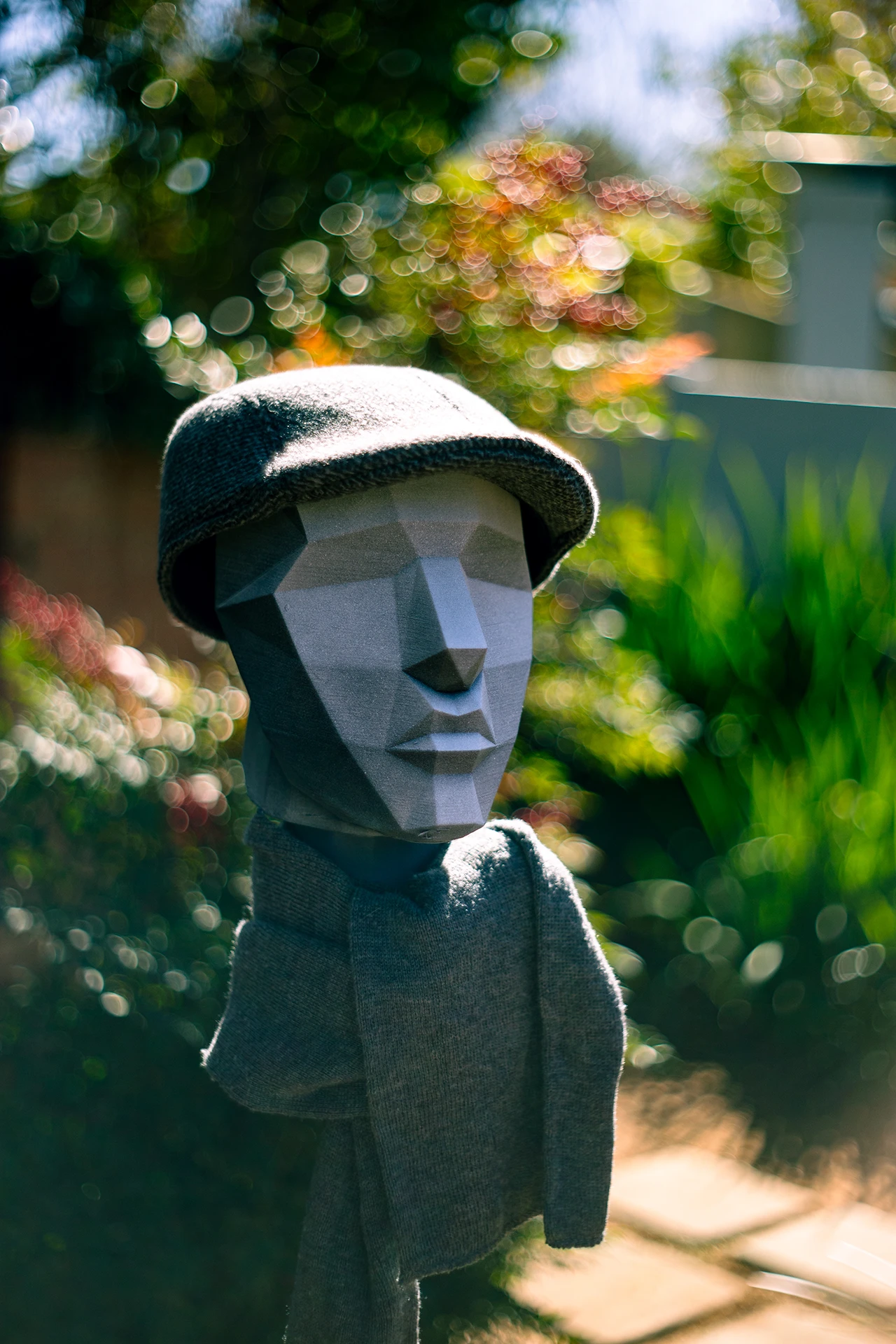
For portraits, you need to be a little careful. The bokeh can be beautiful, but it can also become distracting if the background is too chaotic. If you choose your background well, though, it can give portraits a very distinct look.
This is not the lens I would grab for clean product photography or anything where I need a neutral, predictable result.
It is a lens for character.
What to Watch Out for When Buying One
If you are thinking of buying a Pentacon Auto 50mm f/1.8, condition matters.
The main things I would check are:
- Is the focusing ring smooth?
- Are the aperture blades clean?
- Does the aperture open and close properly?
- Is there fungus or haze inside the lens?
- Is the M42 thread in good condition?
- Has the lens been modified or damaged?
- Are there dents around the filter ring?
The stiff focusing on my copy is the biggest thing I would warn people about. A lens can look fine in photos, but if the focus feels like it was lubricated with old candle wax and regret, it becomes much less enjoyable to use.
Also, because this is an M42 lens, make sure you have the right adapter for your camera system.
If you are using mirrorless, adapting M42 lenses is usually very easy.
If you are using a DSLR, check compatibility carefully, especially for infinity focus and mirror clearance depending on your camera.
Pentacon 50mm f/1.8 vs Other Vintage 50mm Lenses
The Pentacon sits in a very crowded space. There are many vintage 50mm lenses, and a lot of them are good.
So why pick this one?
The main reason is the bokeh and close focusing.
Compared to a more neutral vintage 50mm, the Pentacon has a stronger visual signature. It is more likely to give you a background that people notice. That can be good or bad, depending on the photo.
Compared to something like the Helios 44-2, which is famous for swirly bokeh, the Pentacon feels different. The Helios is more about swirl and movement in the background. The Pentacon is more about bubble highlights and close-up character.
So I would not say one replaces the other. They do different things.
If you like vintage lenses because you want unusual rendering, the Pentacon makes sense. If you want one clean 50mm that behaves itself in most situations, this might not be the safest choice.
Pros and Cons
Pros
- Strong bubble bokeh
- Good close-focusing ability
- Solid all-metal build
- Compact and easy to adapt
- Works well for flowers, details, portraits, and creative shots
- Has a very distinct vintage character
- Still usable on both full-frame and crop sensors
Cons
- Condition varies a lot from copy to copy
- Focusing can be stiff if the lens needs servicing
- Bokeh can become distracting in busy scenes
- Manual focus only
- Not the best choice if you want clean, modern rendering
- May need an adapter depending on your camera system
Is the Pentacon Auto 50mm f/1.8 Worth Buying?
Yes, if you want a vintage 50mm lens with character.
The Pentacon Auto 50mm f/1.8 is worth considering if you enjoy lenses that do something visually interesting. It is especially worth looking at if you like bubble bokeh, close-up photography, and vintage rendering.
It is not the lens I would recommend to everyone. If you want the sharpest, cleanest, most predictable 50mm lens, this is probably not the one.
But if you want a lens that can give your photos a very specific look, it is a lot of fun.
Just be careful when buying. Try to get a copy with smooth focus, clean glass, and working aperture blades. A good copy will be much more enjoyable than one that needs servicing.
Final Verdict
I would give the Pentacon Auto 50mm f/1.8 an 8/10.
It is a flawed lens, but in a very vintage-lens kind of way.
The stiff focusing on my copy definitely holds it back, but the optical character makes up for a lot. The close focusing is useful, the build quality is solid, and the bubble bokeh can be genuinely beautiful when used in the right situation.
This is not a lens for perfection.
It is a lens for personality.
And sometimes, that is exactly what makes an old lens worth keeping.
Related Posts

Share this article
Follow us
A quick overview of the topics covered in this article.
Latest articles

November 10, 2026
November 10, 2026