Shelf to Mount
This is the Ricoh Rikenon 50mm F2, and I have no idea why I originally bought it.
There are quite a few versions of the Rikenon 50mm F2 out there, but mine is from 1982.
Here is what you can expect from this specific version:
- Optics: 6 elements in 5 groups
- Aperture: 6 aperture blades
- Weight: 135g
- Filter Size: 52mm screw-in thread
Is It Radioactive?
I’m not sure if it’s just my eyes, but I noticed some yellowing on the lens.
Now, this doesn’t necessarily mean the lens is radioactive and uses thorium.
Fortunately, I recently got a Geiger counter.
I have a DIY lens database for my collection, and about 11 lenses got marked as radioactive, so let’s test this lens and see whether it’s radioactive or if it’s just the coatings turning yellow.
I’m glad to say this lens is not radioactive.
It’s safe from “The Bunker” (the name for the metal box where I keep radioactive lenses), so it’s just the coatings turning a bit yellow with age.
Build Quality and Handling
I had the usual problem I experience with Pentax mount lenses on the Canon, which is the lens getting stuck.
Fortunately, I was able to remove it, but still, this isn’t something I enjoy when it happens.
The build quality of the lens is pretty good.
The body feels plastic, but the focus ring is nice and wide, especially if you have large fingers.
My copy’s focus is pretty smooth.
The aperture ring feels a bit stiff, making it difficult to change when handholding, but on my adapter it feels pretty good.
Still very stiff, though.
Being so lightweight at 135g, it’s a nice walk-around lens.



A Tale of Two Bokehs
When I was using the lens on my Canon 6D, I originally thought it produced regular bokeh in the background.
It was only about halfway through my shoot that I discovered the lens has a bit of a quirk in the bokeh department.
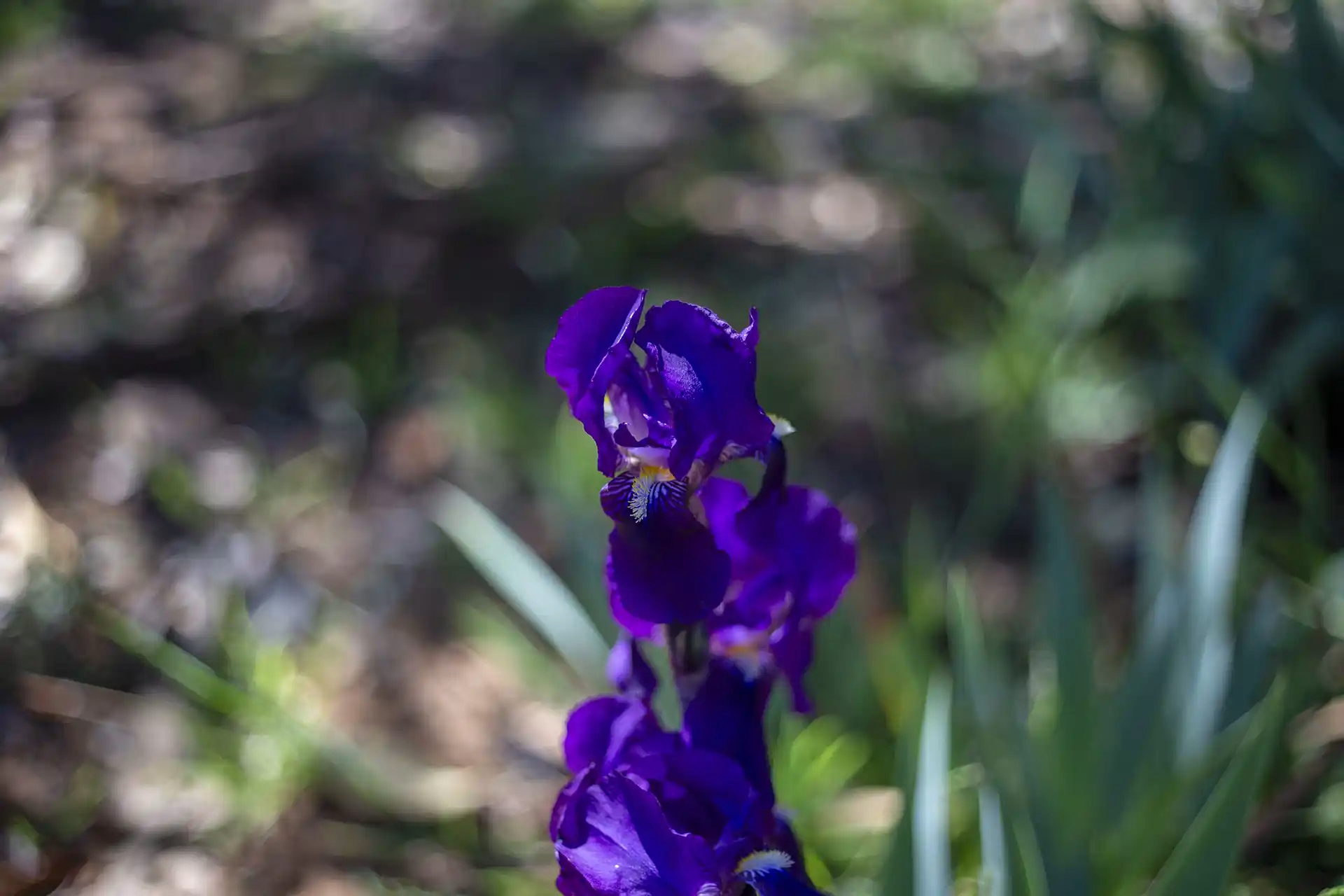
It can make pretty smooth bokeh when the background isn’t busy.
For example, in photos of a flower, there aren’t any bubbles to be seen.
But the moment you have some movement or complex shapes in the background, the bubbles start to appear.
You can even see both variations in one photo: a wall giving you nice smooth bokeh, and the other side of the garden being out of focus, giving you bubble bokeh.
This lens isn’t as bubble-crazy as some of the other lenses I’ve tested, and I do like the oddball bokeh.
Image Quality
I even managed to photograph a bee with this lens.
In the stop-down test, wide open the lens loves to make its weird mix of bokeh.
Complex items in the background create bubbles, and less busy areas make a pleasing bokeh.
There’s some chromatic aberration when shooting wide open, and it does look like some glowing is prominent in this lens.
Stopping down, the chromatic aberration seems to go away.
Stopping down further, the bubble bokeh seems to be replaced with hexagon bokeh.
Is It Worth It?
So in the end, was this lens worth it?
I’d say yes.
It’s an interesting lens for sure, and the plastic build makes it very lightweight when taking photos.
When shooting wide open, yes, some bits of the photo will be soft in comparison to the rest, but it can be really surprisingly sharp considering it’s wide open.
When comparing it to the other bubble bokeh lenses in my collection, this lens is interesting because I like the fact that the bokeh changes based on the background.
– Have a complex background? BOOM, bubble bokeh.
– Have a simpler, flatter background? BOOM, smooth background bokeh.
– Have both in a scene? Boom, you get both.
So the big question: where does it fit in my collection?
I’d say it fits somewhere between the need for bubble bokeh and regular bokeh.
This is an interesting lens, especially considering how sharp the center is.
As to who I’d recommend it to, I think I can see this lens being used for portraits or even just as a good walk-around lens.
The lightweight, fast aperture makes it pretty good for this, provided you don’t have problems with the Pentax K mount.
And once again, thank you so much for reading, and I’ll see you next time.
Share this article
Follow us
A quick overview of the topics covered in this article.