
The Soap Bubble Clone: TTArtisan 100mm f/2.8 “Modern Vintage” Review
Hello and welcome to Out of the Box, the show where we take a look at the modern side of lenses, or as it’s also known: “Wow, he actually has lenses from this decade!
The Lens
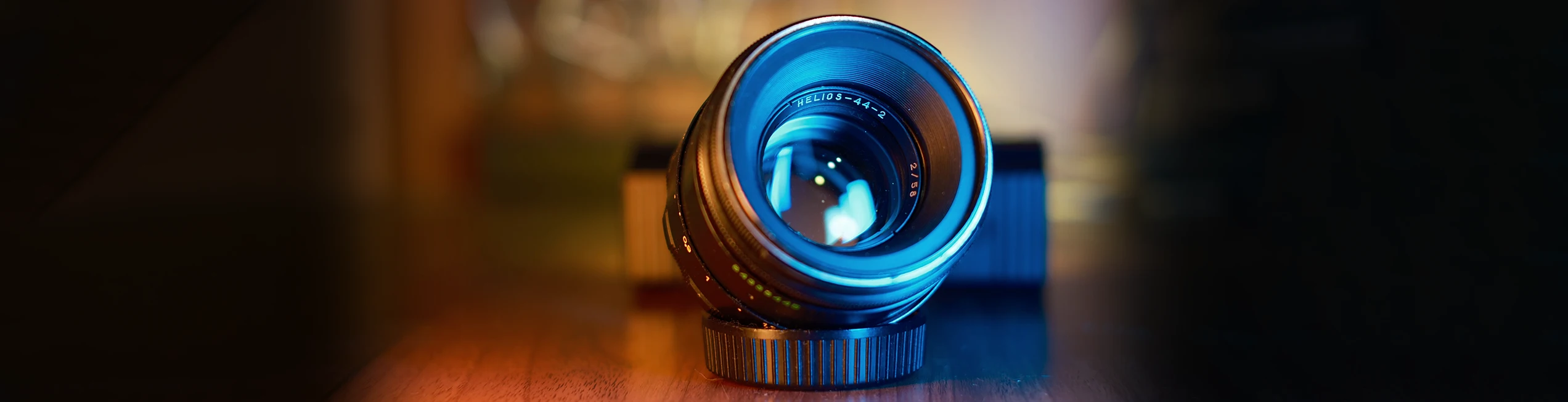
TTArtisan 100mm f/2.8, also known as the “bubble bokeh” lens. For those who don’t know, this lens is essentially a copy of the Meyer-Optik Görlitz Trioplan 100mm f/2.8, an incredibly legendary camera lens.
Backstory: Why did I buy it?
must have this lens; the bubble bokeh looks incredible.” Then I bought it… and it hasn’t really seen much use until now.
Background and Specs
100mm and a closest focus distance of 0.9m. It is designed for full-frame cameras and uses a 49mm filter thread. It features a maximum aperture of f/2.8 and a minimum of f/22. With 13 aperture blades and a Trioplan optical design (3 elements in 3 groups), it’s built for character.
The lens comes in an M42 mount, making it easy to adapt to a multitude of cameras. The official TTArtisan spec sheet lists the weight at approximately 307g, but on my scale, it comes out at 329g.
It’s quite hefty for such a small lens; the all-metal design is proof of that. It even comes with a metal screw-cap for the front and a metal M42 rear cap. The aperture ring is at the front, and the focus ring is at the rear. The focus feels smooth—which I would hope for, considering it’s still a relatively new lens!
Personally, I love how the 13 aperture blades look when you’re stopping down. It’s a real treat to see.
One weird thing:


Photos and Test Drive
As the name implies, this is a bubble bokeh machine. With high contrast and specular highlights in the background, the lens produces distinct bubbles. You can see that the bokeh likes to overlap, and to my eye, it looks slightly like “onion ring” bokeh. That doesn’t bother me, but your mileage may vary.
One thing I noticed is that the raw photos can look very washed out and lacking in contrast. Fortunately, you can fix this easily by sliding the Dehaze slider up.
This is to be expected with a lens that copies the Trioplan formula. As I like to say: vintage lenses come with vintage problems, even if they were made in 2023.
The bokeh wide open is interesting, but there’s a trade-off. You get a ton of halos, especially at f/2.8. If you look at this 100% crop of the berries, there is a lot of “glow” around them, and it’s quite soft.
But here is the interesting part: stopping down to f/4 removes most of the problems. The halos are significantly reduced, and while you still get some “purple gunk” in the form of chromatic aberration, that’s standard for such a simple optical design.
The surprise? The bubble bokeh stays mostly the same.
Take these two photos: one shot wide open (mg7907) and the other at f/4. Yes, the bubbles aren’t quite as wild, but you get a very usable background without everything looking like you smeared Vaseline over the front element. That’s a win in my book.
Another example is this photo of the cherub. Wide open, the background is a bubble explosion, but it feels soft and glowy. At f/4, you still get a wild background, but the subject is much sharper and more detailed.
The “stop-down test” shows this in action; you can actually see the bubbles persisting even as you approach the minimum aperture of f/22.
Flaring and Color
The only time I encountered bad flaring was during specific testing. It can completely wash out the photo—here is an example with Dehaze at 0 and then at 50.
I also noticed something strange while writing this review: from around f/8 onwards in my stop-down test, a specific flare starts forming. I didn’t move my spot, so I wonder if light is reflecting off the aperture blades themselves.
As for color rendering, it feels “okay.” Straight out of the camera, the colors can be a bit muted, but you can easily bring them back in post. It’s exactly what you’d expect from such a simple construction.
On my Canon 6D, the lens felt natural and balanced. On smaller mirrorless bodies, it might feel a bit front-heavy, but for me, it was a joy to use. My personal sweet spot is definitely around f/4.
The Verdict
Yes.
It’s not terribly expensive, the build quality is great, and the character is undeniable. It’s a solid “Modern Vintage” lens. If you want that tactile feel and the “soap bubble” look without the risk of buying an old lens that has more fungus than a mushroom farm, this is a great alternative.
I love that we are seeing these replicas. Given how expensive the original Meyer-Optik is, this is a fantastic way to get that look with a guarantee of
Final Thoughts
The Sign-Off
TTArtisan 75mm f/1.5 (the Biotar clone) that I want to get my hands on, but that’ll remain a dream until I save up some more gear money!
Share this article
Follow us
A quick overview of the topics covered in this article.
Latest articles

October 24, 2026
October 24, 2026

October 24, 2026
