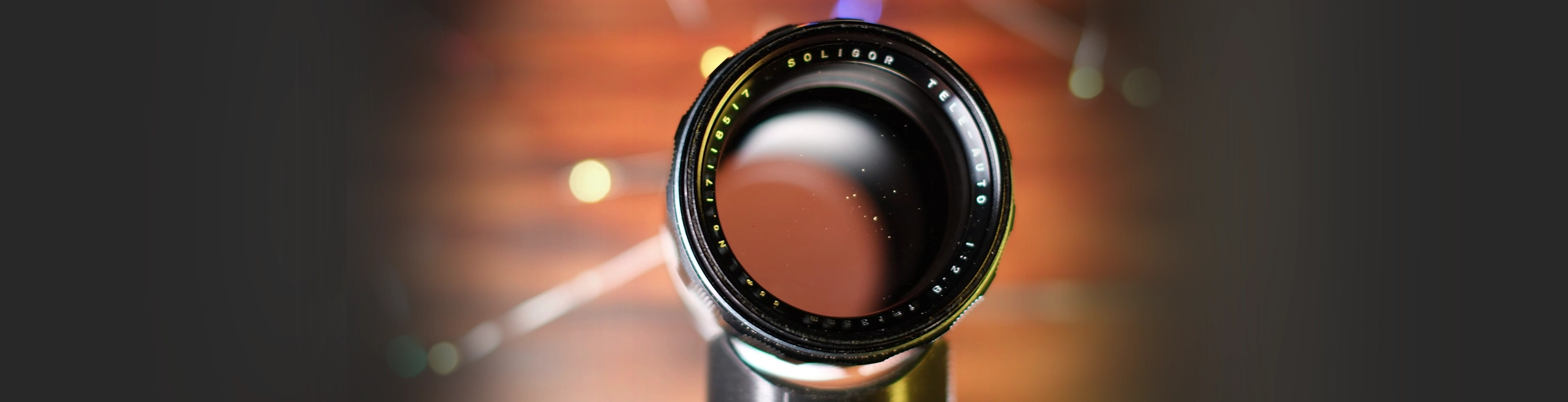
Hello and welcome to “New Old Glass,” a little show where I take a look at some of the new old glass I’ve bought. Or, as my impulse control calls it: “What’s that one?”
Today, we are looking at the Carl Zeiss Jena Tessar 50mm F/2.8.
Now, some of you might think this is my first Carl Zeiss lens, but it’s actually my third. I’m fortunate to own two other lenses in the Carl Zeiss Jena lineup, specifically the 50mm F/2.8 Tessar “Red T” version and the Carl Zeiss Jena Triotar 135mm F/4 “Red T” version, both in the Exakta mount.
Why did I buy this?
Originally, on the site where I buy most of my lenses, there was a camera with this Carl Zeiss lens on it for sale, but I didn’t have the money at the time.
Fortunately for me, the camera and lens later went on auction without a reserve, and I was able to scoop up both for quite cheap.
Technical Specifications
This version was introduced around 1966 and came in both the Icarex mount and the M42 mount. Here are the quick technical details:
Mount: M42 (my copy)
Optical Design: Classic Tessar (4 elements in 3 groups)
Aperture Blades: 5
Build: Solid, all-metal construction
The lens feels great in the hand, and the aperture ring itself is nice and smooth.
The “Vintage Problem”
I wasn’t sure where to drop this in, but I think right before the photos is the perfect spot. At the time of this review, I actually don’t know how to get the lens to stop down.
When I was out taking photos, I thought the aperture was working. I was happily stopping down, going “Wow, it has great bokeh even stopped down!” It was only during the stop-down test I realized something was up.
Holding the aperture lever down doesn’t engage the blades, and pushing in the M42 pin at the back does, well, even less.
A quick Google during the writing of this post shows me this is a pretty common problem with this version of the lens. I suspect I might need to try and repair it, but considering my history with that, I’m a bit reluctant. So for now, this lens is stuck at F/2.8.


Image Quality and Bokeh
Onto the photos and the bokeh, all taken at F/2.8, obviously. The lens loves to make bubbles in the background, especially when close-focusing. And considering it was stuck wide open, the photos are still pretty damn sharp.
Bokeh-wise, I love how it renders the background. With a lot of specular highlights, you will get a ton of those “bubble” bokeh balls. Now, depending on your taste, you’ll either hate this or love it. For me, I really like the character and the bubbles you get with these older lenses.
But, you can also get some nice smooth bokeh in a background without too much movement or highlights. So the lens is able to do both: nice smooth bokeh and wild, crazy bubble bokeh, all depending on the background.
Handling Flare and Color
Flaring-wise, I took photos in bright sunlight, and I didn’t see much flaring, if any. I think this is probably due to the front optical element being so recessed, it acts like a built-in lens hood.
The color rendering of the lens is pretty good, in my opinion. I know with another lens I tested on the same day, the reds came out almost pinkish on my Canon, but on this Zeiss, they look pretty good and natural.
Final Thoughts
It feels good on the camera. Due to its light weight, it’s a very easy walk-around lens. Something I didn’t mention earlier is that you can focus incredibly close with this lens.
I was really surprised. I stood at my usual distance for these types of lenses and then realized I could get much, much closer.
So in the end, was it worth it to buy the Carl Zeiss Jena Tessar 50mm F/2.8? I would say yes. Even though it’s not one of the more sought-after Carl Zeiss lenses, they are still pretty desirable, well, to me, anyway. Even if the aperture doesn’t work, I think it has a nice place in my collection.
As to who I would recommend it to, I don’t know. With a non-functioning aperture, it’s difficult to say. But I love the bokeh and I love the rendering you get with this lens. How it performs stopped down, I have no idea.
It is a classic vintage lens with vintage problems
Share this article
Follow us
A quick overview of the topics covered in this article.