Hello and welcome back to Shelf to Mount, the show where I take a look at the vintage gear I’ve bought and promptly forgot I ever owned.
Or, as my bank account prefers to call it, “The Ongoing Financial Crisis.”
Today, we are looking at the Yashica Yashinon-DS 50mm F1.9. It’s quite a mouthful to say, and honestly, it’s a lens that leaves me with more questions than answers.
The biggest one being: Why did I buy this?
Why Is This on My Shelf?
Looking at my shelf, I see I already own the Yashinon 50mm F1.7. Compared to this F1.9 version, the 1.7 is significantly heavier.
I have a vague memory of wanting the DS model after watching a video from Simon’s Utak, but for the life of me, I can’t remember exactly which video sparked the urge.
Technical Specifications
Despite my memory gaps, the specs on this piece of glass are quite interesting for those who love the technical side of things:
Mount: M42 screw mount
Optical Formula: 6 elements in 5 groups
Aperture Blades: 6 blades
Weight: A featherlight 203 grams
Filter Size: 52mm
Technical Specifications
Back to the lens itself. Originally announced in 2014, here is what is going on under the hood:
Optics: 14 elements in 11 groups.
Special Elements: Two Aspherical elements and one Low-Dispersion element.
Aperture: 7 aperture blades.
Weight: 240 grams.
With its entirely plastic body, that feather-light weight makes perfect sense.


Build Quality and Feel
The build of the lens features a rubberized focus ring. Usually, on lenses of this age, these rubber rings dry out or loosen up, but this one feels surprisingly tactile.
The focus throw on my copy was a bit stiff when I first picked it up, but it’s smoothed out nicely with use. It’s dampened, but responsive.
The aperture clicks distinctly from F1.9 all the way down to F16. The aperture feels smooth and clicky, which is always a plus in my book.
Image Quality: Photography and Bokeh
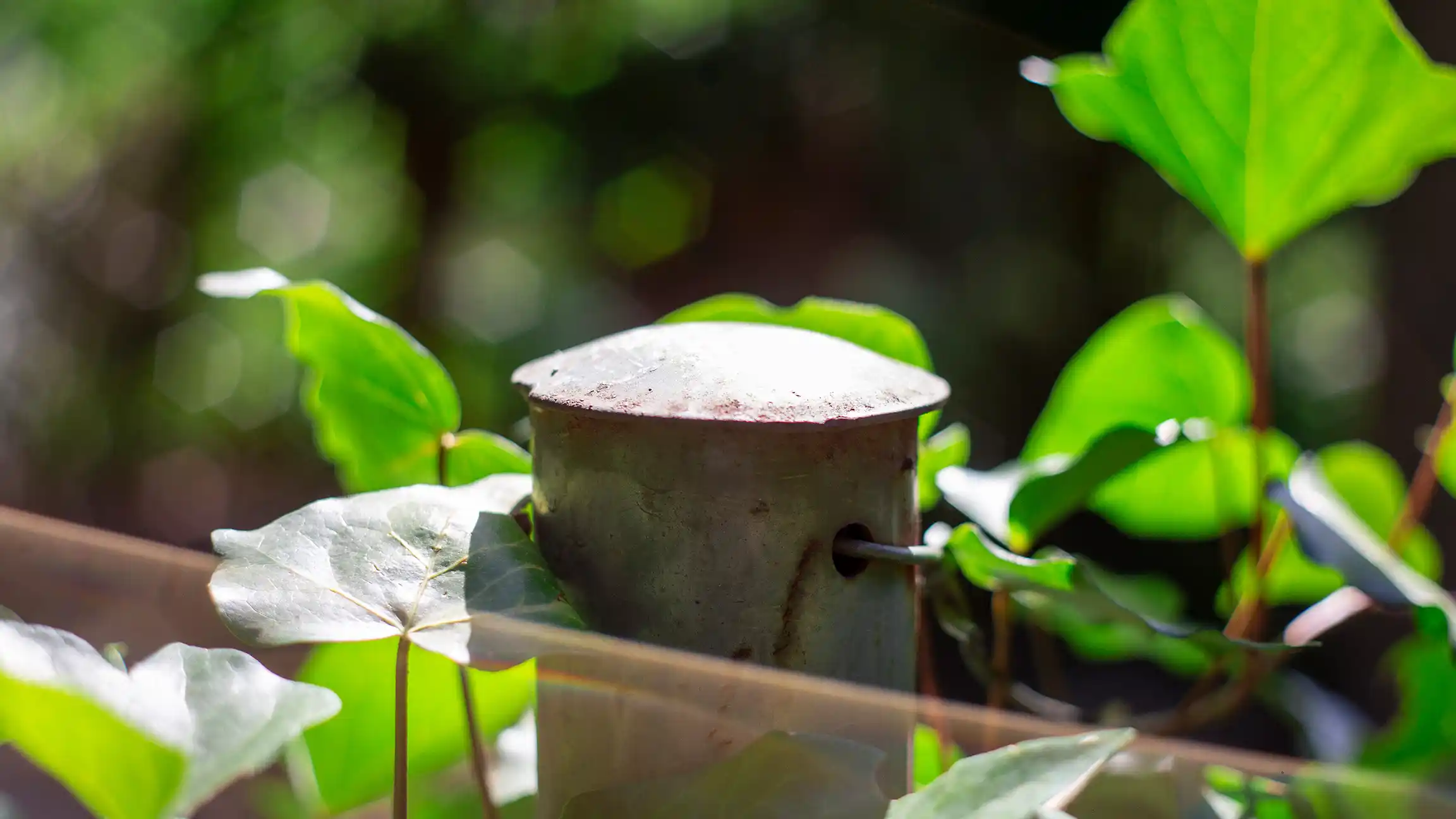
When shooting wide open, this lens has a habit of rendering “cat’s eye” bokeh towards the edges of the frame. However, once you stop it down, those highlights turn into distinct hexagons.
It’s interesting for me because with a lot of modern lenses, we usually look for backgrounds which are not busy and will give a smoother appearance.
But with vintage glass like this, I actually prefer finding backgrounds that are busy and filled with specular highlights. I find it helps to bring the lens to life, whereas flatter backgrounds will deliver a more boring result instead of giving you a bokeh festival.
The Mystery Swirl
Speaking of the bokeh, there is something unique happening here I didn’t see when I was originally taking the photos.
If you look at the curve of the tree and the texture on the right in some of these shots, that almost looks like swirling bokeh.
It’s not quite a Helios 44-2, but there is definitely something giving it that swirl effect. I noticed an odd curve on some frames where the tree looks distorted on the left side.
I am tempted to go back to where I took these and see if it’s just my imagination or if the area is just like that. Let me know in the comments what you think, do you see it too, or am I just imagining things?
Flaring and Sharpness
On the flaring front, it’s interesting. At certain angles, you get these surprisingly straight lines of light.
I suspect this is internal reflection bouncing off the straight edges of the aperture blades. I kind of like it, it’s very weird, as I don’t think I have seen flaring like this before.
In terms of sharpness? It punches above its weight. Wide open at F1.9, it’s surprisingly usable.
Yes, you can see the Chromatic Aberration, specifically the purple fringing around the subject, but the focal plane itself is sharp. As you’d expect, stopping down cleans up that fringing and sharpens the frame significantly.
Final Thoughts: Was it Worth It?
So, in the end, was the Yashinon-DS F1.9 worth digging out of my lens collection and taking for a spin?
On the whole I would say… maybe. It renders beautiful imagery, and for a “walk-around” lens, the light weight is fantastic.
However, with the other glass at my disposal, I’m not sure this is the one I’d grab first if I was looking for a vintage lens to take with me on a walkabout or a holiday.
But, if you are just getting into the world of vintage lenses and want that specific rendering you get with older glass, this is a solid entry point.
The real question for me remains: how does it stack up against its big brother, the F1.7? Does that fraction of a stop in aperture actually make a difference? I think we need a shootout or a review video to decide.
That was the Yashica Yashinon-DS 50mm F1.9, a vintage lens with a lot of vintage character.
Let me know in the comments, do you prefer the clean look of modern glass, or the character of these old lenses? Or are you like me and you prefer both, as both have a place in the world?
Thanks for reading, and I will see you next time!
Share this article
Follow us
A quick overview of the topics covered in this article.